


At Filterbuy, we’ve spent over a decade obsessing over what it takes to keep home air healthy, and one thing we hear constantly from homeowners is this: “I know I’m supposed to tune up my AC, but I have no idea what that actually means.”
That’s the problem.
Our technicians experience that homes with the worst indoor air quality are almost always the ones where the AC hasn’t been properly maintained.
To summarize it, an AC tune-up is a professional maintenance service. It covers inspection and cleaning of your cooling system. This process helps your HVAC run efficiently, safely, and without quietly polluting the air your family breathes.
Remember, it’s not a repair. It’s prevention. Based on the most common findings we get, most HVAC units are working far harder than they should be simply because they’ve never had a tune-up before.
In this guide, we’ll cut through the vague answers and walk you through exactly what’s included, what gets missed when you skip it, and why your AC’s condition has a direct impact on your home’s air quality. Not just your energy bill.
TL;DR: Quick Answers
What Does It Mean To Tune Up Your AC?
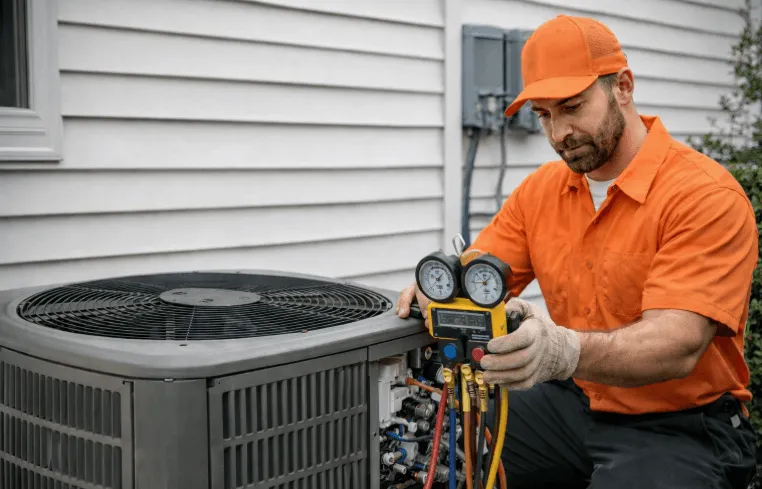
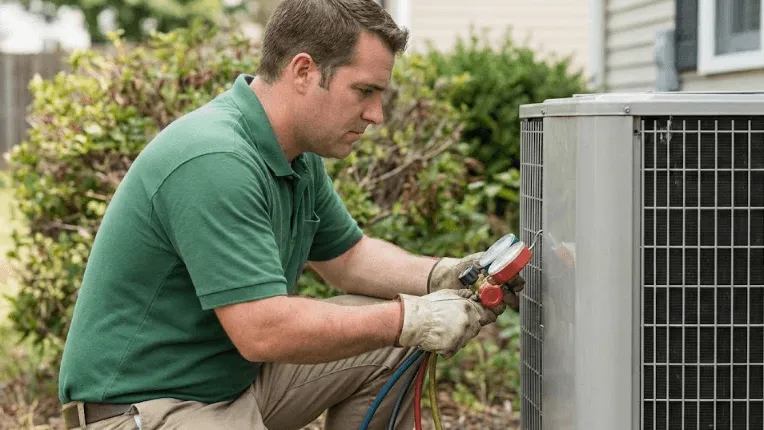
Tuning up your AC means scheduling a professional, preventive maintenance service that inspects, cleans, and optimizes your cooling system before problems occur.
It is not a repair. It is prevention.
A complete AC tune-up includes:
- Cleaning evaporator and condenser coils
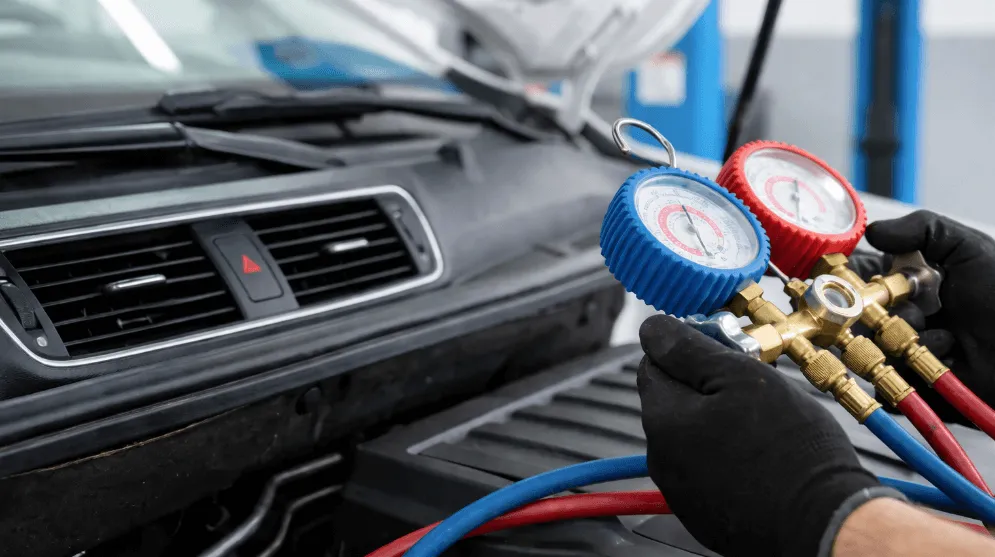
- Checking refrigerant levels
- Clearing the condensate drain line
- Calibrating the thermostat
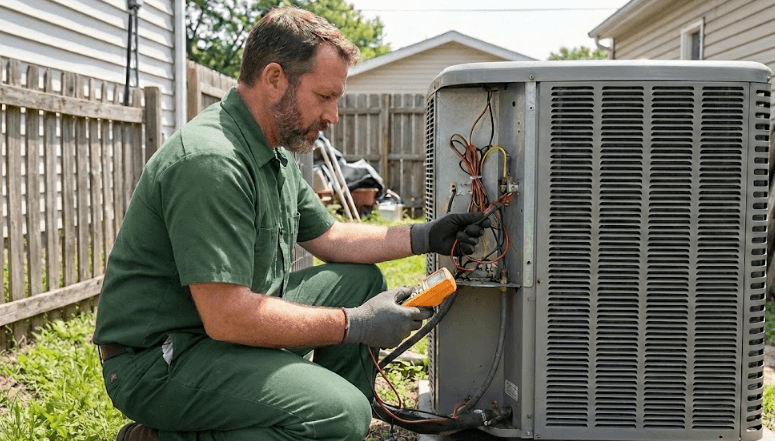
- Inspecting electrical connections, capacitors, and contactors
- Testing airflow and overall cooling efficiency
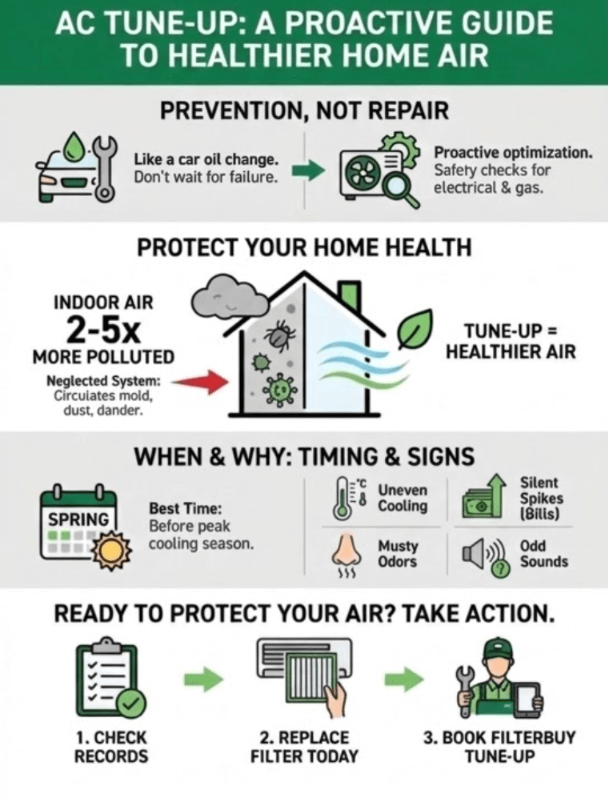
How often: Once per year. Often, ideally in spring, before peak cooling season.
What it costs: $75–$200 on average.
What skipping it costs: $600–$2,500+ in preventable repairs plus a 5–15% loss in system efficiency every season
Our Filterbuy perspective: An AC tune-up is not just a mechanical service. It is a home air quality decision. A neglected system recirculates mold spores, allergens, and contaminants through every vent with every cooling cycle. A properly tuned system that paired with a clean air filter actively protects the air your family breathes every day.
Bottom line: You have to take care of your AC by tuning it up before it lets your family down.
Top Takeaways
1: An AC tune-up is a home health decision, not just a maintenance task.
2: A neglected AC actively degrades your indoor air quality.
3: Skipping a tune-up costs far more than scheduling one.
4: A tune-up and a clean air filter work as a team.
5: The right time to act is before your system tells you something is wrong.
What an AC Tune-Up Actually Means
Simply put, an AC tune-up, also called an AC service or HVAC maintenance visit, is a scheduled professional checkup for your home’s cooling system. A trained technician inspects, cleans, tests, and adjusts your air conditioner to make sure every component is working the way it should.
Think of it the way you think about an oil change for your car. You don’t wait for the engine to seize before taking it in. You maintain it on a schedule because prevention is always cheaper and smarter than repair. Your AC works the same way. And based on what our Filterbuy HVAC technicians see in homes every day, the ones that never get tuned up are the ones that break down mid-July, run up energy bills, and quietly circulate dirty air throughout the house.
What Does an AC Tune-Up Include?
A thorough AC tune-up covers your entire cooling system, not just a glance and a filter swap. Here’s what a professional service should include:
Inspection & Safety Checks
- Thermostat calibration check to ensure accurate temperature readings
- Inspection of electrical connections, wiring, and controls for safety
- Check of refrigerant levels and inspection for leaks
- Examination of the condensate drain line to prevent water damage and mold growth
Cleaning
- Cleaning of evaporator and condenser coils, dirty coils are one of the leading causes of reduced efficiency and poor air quality we see in the field.
- Clearing of the condensate drain to prevent blockages
- Cleaning or replacement of the air filter
System Performance Testing
- Measurement of airflow and system pressure
- Testing of capacitors, contactors, and motors
- Evaluation of overall cooling performance and efficiency rating
One thing we find that most homeowners don’t realize: dirty coils and a clogged drain line don’t just hurt efficiency, they actively introduce mold, mildew, and contaminants into the air circulating through your home. Addressing these during a tune-up is as much about your family’s health as it is about your energy bil
AC Tune-Up vs. AC Repair: What’s the Difference?
This is a question we get all the time, and the answer is straightforward. A tune-up is preventive. You schedule it before something goes wrong. A repair is reactive. You only call for it after something has already broken.
The important distinction is cost and timing. In our experience, homeowners who get annual tune-ups catch minor issues such as a worn capacitor, low refrigerant, or a partially blocked drain. A tune-up typically costs a fraction of what an emergency repair or full system replacement runs. Prevention isn’t just good practice; it’s good math.
How an AC Tune-Up Directly Impacts Your Home’s Air Quality
This is where most HVAC content stops short and where Filterbuy’s perspective is different. An AC tune-up isn’t only about keeping your system running. It’s about what that system is doing to your air.
Your air conditioner doesn’t just cool your home; it circulates and filters every breath of air your family takes indoors. When coils are dirty, drain lines are blocked, or filters are clogged, your system stops filtering effectively and starts spreading the problem. Dust, pollen, mold spores, and other allergens get pushed through your vents and settle throughout your living spaces.
We’ve seen firsthand how a neglected AC system can undermine even the best air filter. A well-maintained system works with your filter. A poorly maintained one works against it. That’s why at Filterbuy, we look at an AC tune-up and regular filter changes as two parts of the same commitment to clean indoor air.
How Often Should You Get an AC Tune-Up?
The standard recommendation and the one we stand behind, based on years of servicing residential systems, is once per year, ideally in the spring before peak cooling season begins. If you live in a region with a long, hot summer or your system runs heavily year-round, twice a year (spring and fall) is worth considering.
A few signs your AC might need attention sooner than scheduled: uneven cooling room to room, higher-than-usual energy bills, unusual sounds or smells from your vents, or visible dust buildup around your registers. Any of these is your system telling you something’s off.
What to Expect When You Schedule a Filterbuy HVAC Tune-Up
When you schedule a tune-up with Filterbuy HVAC Solutions, you’re not getting a quick scan and a checkbox. Our technicians are trained to treat your home’s air quality, not just your equipment, as the end goal. That means a thorough inspection, honest findings, and no upselling on services you don’t need.
We’ll walk you through exactly what we found, what we did, and what to watch for going forward. Because our job isn’t just to service your system. It’s to make sure you feel confident and informed about the air your family breathes every day.
The Bottom Line on AC Tune-Ups
An AC tune-up means taking care of your cooling system before it has a chance to let you down or let your air quality down. It’s a professional maintenance service that cleans, inspects, and optimizes your system so it runs efficiently, safely, and in a way that actively supports healthier indoor air.
Skipping it is a gamble that rarely pays off. Scheduling it annually is one of the simplest, highest-impact things a homeowner can do to protect their comfort, their budget, and the air their family breathes.
Ready to schedule your AC tune-up? Filterbuy HVAC Solutions brings the same obsession with clean air that’s made our filters trusted by millions of homes, right to your system.
“In our experience servicing homes across the country, the ones with the worst indoor air quality almost always share one thing in common. An AC system that’s never been tuned up. A neglected system doesn’t just lose efficiency; it actively works against the clean air your family deserves.”
— Filterbuy HVAC Solutions
Everything You Need to Make a Smart Decision About Your AC Tune-Up, Straight From the Most Trusted Sources Out There
We’re not just here to tell you what an AC tune-up means. We want to make sure you have everything you need to act on it confidently. These are the seven resources our team at Filterbuy thinks every homeowner should read before scheduling service.
No fluff.
No runaround.
Just the most useful, trustworthy information available, organized so you can get to what matters fast.
1. The Real Reason Your AC Tune-Up Is About More Than Just Cooling
Source: U.S. Environmental Protection Agency (EPA), Improving Indoor Air Quality
URL: https://www.epa.gov/indoor-air-quality-iaq/improving-indoor-air-quality
Here’s something most HVAC companies won’t tell you upfront: your air conditioner is one of the biggest factors determining the quality of the air your family breathes indoors. The EPA’s official guide on indoor air quality makes this connection crystal clear. Showing exactly how a poorly maintained HVAC system circulates dust, allergens, mold spores, and pollutants through your home every time it runs. At Filterbuy, this is exactly why we treat every tune-up as an air quality service, not just a mechanical one.
📌 Read this first if: You want to understand why skipping your AC tune-up isn’t just a comfort issue.
It’s a health one.
2. The Government-Backed Proof That a Tune-Up Pays for Itself
Source: U.S. Department of Energy (DOE), Consumer Guide to Home Heating and Cooling URL: https://www.energy.gov/sites/default/files/2021-08/ES-HomeHeatingandCooling_081221.pdf
We’ve seen it firsthand in homes across the country. A well-maintained AC system simply runs better and costs less to operate. The DOE’s consumer guide backs this up with hard numbers, showing that routine preventive maintenance can reduce your annual energy costs by up to 15%. For the average homeowner, that’s real money back in your pocket every year. Far more than the cost of the tune-up itself.
📌 Read this if: You need to see the numbers behind why annual AC maintenance is one of the smartest home investments you can make.
3. How to Make Sure You’re Hiring the Right Person for the Job
Source: U.S. Environmental Protection Agency (EPA), Homeowner FAQ: AC Maintenance & Refrigerant
URL: https://www.epa.gov/ods-phaseout/homeowners-and-consumers-frequently-asked-questions
Not all HVAC technicians are created equal. The EPA has specific guidance on exactly what to look for before you let anyone touch your system. Under the Clean Air Act, any technician who handles refrigerants is required to hold EPA Section 608 certification. This resource tells you exactly what questions to ask, what credentials to verify, and what red flags to watch for. At Filterbuy, our technicians are fully certified and we think every homeowner deserves to know why that matters.
📌 Read this if: You want to know how to vet your HVAC technician before booking and make sure you’re getting qualified, certified service.
4. What Your AC Manufacturer Actually Expects From Annual Maintenance
Source: Carrier – Air Conditioner Tune-Up & Maintenance Tips
This one surprises a lot of homeowners: most AC manufacturers require documented annual maintenance to keep your system warranty valid. Carrier is one of the most trusted names in the industry. Here, they break down exactly what a standard tune-up should include, what it costs in 2025 (typically $75–$350 depending on system type and location), and why regular service is essential to protecting the investment you’ve already made in your home’s cooling system.
📌 Read this if: You have a newer or warrantied AC system and want to understand what your manufacturer requires and what cutting corners could cost you down the line.
5. The Detailed Tune-Up Checklist That Tells You Exactly What Good Service Looks Like
Source: The Cooling Company, What Is an AC Tune-Up? (And Why Your System Needs One)
URL: https://www.thecoolingco.com/blog/what-is-an-ac-tune-up/
Want to know if your technician is actually doing the job right? This practitioner-written resource lays out a full 18-step tune-up checklist, which is the kind of transparency we believe every homeowner deserves. It also flags one of the most commonly missed items in a lazy tune-up: the blower motor. Left unchecked, a worn blower motor can fail mid-summer and cost $600–$1,200 to fix. A five-minute check during a tune-up catches it before it ever gets to that point.
📌 Read this if: You want to know step-by-step what a thorough, professional tune-up should cover, so you can hold your technician accountable.
6. Why Spring and Fall Tune-Ups Are Two Very Different Services
Source: Alpha Mechanical, HVAC Tune-Up Checklist: What Does It Include?
URL: https://alphamechanicals.com/blog/hvac-tune-up-checklist-what-does-hvac-tune-up-include/
One of the things we always explain to homeowners is what a technician checks in spring. The refrigerant levels, condenser coils, thermostat staging. It is not the same as what gets checked in the fall. Your system faces completely different demands in each season, and a single annual visit may not be enough for homes in hot or high-use climates. This resource, aligned with EPA and DOE standards, breaks down exactly what changes from season to season and why a twice-yearly maintenance schedule is worth considering.
📌 Read this if: You want to build a year-round AC maintenance plan, not just a once-a-year checkbox.
7. The Plain-English Breakdown of AC Tune-Up vs. AC Maintenance
Source: CM Heating, AC Tune-Up vs. AC Maintenance: What’s the Difference?
URL: https://cmheating.com/what-is-the-difference-between-an-ac-tune-up-vs-maintenance/
If you’ve ever used “tune-up” and “maintenance” interchangeably…you’re not alone. Most homeowners have. But they’re not quite the same thing, and knowing the difference helps you ask better questions, get better service, and take better care of your system between professional visits. This resource clears it up in plain language, including a practical guide to the simple DIY tasks you can safely handle yourself, like filter changes and keeping your outdoor unit clear. That way, your system stays in better shape year-round.
📌 Read this if: You’re new to HVAC maintenance or want a clear, jargon-free explanation of what you’re actually paying for when you book a tune-up.
What the Data Confirms And What We See Firsthand in Homes Every Day
We’ve spent over 12 years servicing HVAC systems across the country. The three statistics below come from the EPA, the Department of Energy, and ENERGY STAR and every one of them reflects exactly what our technicians find when they open an AC unit that hasn’t been tuned up in years.
1. Indoor Air Is 2 to 5 Times More Polluted Than Outdoor Air. Your AC Is a Key Reason Why
The Stat: Americans spend approximately 90% of their time indoors, where pollutant concentrations are often 2 to 5 times higher than outdoors.
Source: U.S. EPA, Indoor Air Quality Report on the Environment
🔗 https://www.epa.gov/report-environment/indoor-air-quality
What we’ve found in the field: Most homeowners assume outdoor air is the bigger threat. After years of opening HVAC systems in homes across the country, here’s what we know to be true:
- A neglected AC system doesn’t filter your air. It recirculates contaminants back through your vents every time it cycles on
- Dirty coils, clogged drain lines, and overdue filters turn your system from the solution into the source of the problem
- Houses with the worst indoor air quality consistently share one thing: an AC system that’s never been properly maintained
- A tuned, well-maintained system actively works with your air filter to protect your family’s air. A neglected one works against it
The bottom line: An AC tune-up isn’t just a mechanical service. In our experience, it’s one of the most direct actions a homeowner can take to protect indoor air quality.
2. A Single Dirty Coil Can Silently Drain 5–15% of Your AC’s Efficiency Every Season
The Stat: Keeping your air conditioner’s evaporator coil clean can reduce energy use by 5 to 15 percent.
Source: U.S. Department of Energy – Energy Saver: Home Cooling
🔗 https://www.energy.gov/energysaver/articles/energy-saver-101-home-cooling-infographic
What we’ve found in the field: A dirty evaporator coil is the single most consistent culprit we find behind unexplained energy bills. Here’s why it matters:
- Your home still cools. The system still runs. But you’re quietly paying a hidden efficiency tax every single month
- This loss doesn’t announce itself. It compounds silently, season after season, until it triggers a breakdown
- Coil cleaning is one of the highest-ROI tasks in any AC tune-up and one of the fastest to complete
- We make it a non-negotiable part of every Filterbuy HVAC service visit for exactly this reason
The bottom line: Most homeowners wouldn’t skip an oil change. Based on what the DOE data shows and what we see firsthand, skipping an annual AC tune-up has almost identical consequences for performance and cost.
📊 3. Nearly Half of Your Entire Energy Bill Is Your HVAC System
The Stat: Nearly half of the energy used in your home goes to heating and cooling, making your HVAC system the single largest energy consumer in your household.
Source: ENERGY STAR / U.S. EPA, Heat & Cool Efficiently
🔗 https://www.energystar.gov/saveathome/heating-cooling
What we’ve found in the field: Of all the things drawing power in your home, nothing comes close to your HVAC system. Here’s what that means practically:
- The average household spends more than $2,200 a year on energy bills, and nearly half goes to heating and cooling
- Most homeowners optimize around the edges of their energy bill for their appliances, lighting, and devices, while leaving the biggest lever untouched
- A professionally tuned AC system running at the efficiency it was designed for is the highest-return maintenance investment available to any homeowner
- Paired with a clean, correctly rated Filterbuy air filter, it’s the most complete, cost-effective home air protection routine we know of
The bottom line: The condition of your AC system isn’t a minor detail. It’s the biggest financial and air quality decision you make about your home, whether you realize it or not.
Our Final Thought: An AC Tune-Up Is a Home Health Decision, Not Just a Maintenance One
After more than a decade of manufacturing air filters and servicing HVAC systems across the country, here’s our honest opinion:
The HVAC industry frames AC tune-ups as a mechanical service. We think that misses the bigger picture entirely.
A neglected AC system doesn’t just lose efficiency. It actively works against the family living in that home, pushing mold spores, dust, pet dander, and allergens through every vent with every cooling cycle. That’s not a theory. That’s what our technicians find every time they open a system that hasn’t been serviced in years.
What This Page Covered: The 5 Things That Matter Most
- A tune-up means prevention, not repair. It catches small problems before they become expensive emergencies and before they compromise your air.
- What’s included is what makes the difference. Coil cleaning, drain line clearing, refrigerant checks, electrical inspections. Skip any of these and your system pays the price in efficiency and air quality.
- Your AC and your air quality are directly connected. The condition of your system determines what your family breathes every day. A well-maintained system works with your air filter. A neglected one works against it.
- The data is unambiguous:
- Indoor pollutants run 2–5x higher than outdoors
- A dirty evaporator coil costs 5–15% in lost efficiency
- Nearly half your energy bill goes to heating and cooling
- A tune-up and a quality filter work as a team. Neither delivers its full value without the other. That’s the complete picture and that’s exactly what Filterbuy offers.
The Filterbuy Take: What We’d Tell Every Homeowner
Don’t wait until your AC fails in July to think about what it’s been doing to your air all year.
- Schedule your tune-up annually – spring, before peak cooling season, is ideal
- Change your filter on schedule – a tuned system with a clogged filter is still losing the battle
- Know what your technician should be checking – use the checklist in this guide to hold them accountable
- Treat your indoor air as seriously as your outdoor air – the EPA’s own data says you should
The Bottom Line
An AC tune-up means taking care of your cooling system before it lets your family down. It’s one of the simplest, highest-impact steps any homeowner can take to protect their comfort, their budget, and the air the people they love breathe every single day.
That’s what Better Air For All means to us. And it’s why we’re not going anywhere.
Your Next Steps: Protect Your Home’s Air Starting Today
You’ve got the knowledge. Here’s exactly what to do with it.
Step 1: Find Out When Your AC Was Last Serviced
- Check receipts, records, or your HVAC service history
- Look for a technician sticker on your outdoor unit or air handler
- No record? Assume it’s overdue
The rule: More than 12 months since your last service = book a tune-up now.
Schedule Your Filterbuy HVAC Tune-Up
Step 2: Book Your AC Tune-Up Before Peak Season
- Best time: Spring. Before your system runs at full capacity
- What’s included in every Filterbuy visit:
- Evaporator and condenser coil cleaning
- Refrigerant level check
- Condensate drain line inspection and clearing
- Thermostat calibration
- Electrical connections, capacitors, and contactors check
- Airflow and cooling efficiency testing
- What you get: A full findings report. No surprises, no upselling
Step 3: Check and Replace Your Air Filter Right Now
This takes under 2 minutes. Do it before you close this tab.
- Pull your current filter out
- Hold it up to the light. If you can’t see through it clearly, replace it today
- Check the size printed on the filter frame before ordering
How often to replace air filters:
- Every 30–60 days – homes with pets or allergy sufferers
- Every 60–90 days – average households
- Every 90 days minimum – no exceptions
Find Your Filter Size at Filterbuy. 600+ Sizes, Fast & Free Shipping
Step 4: Set Up Auto-Delivery. Set It, So You Don’t Forget It
- Choose your filter size and replacement frequency
- Filterbuy ships your replacement filter automatically, factory-direct
- No store runs. No guessing. No forgetting.
Set Up Filterbuy Auto-Delivery
Step 5: Watch for These Warning Signs! Don’t Wait for Annual Service
Act now. Not later…if you notice any of these:
🔴 Uneven cooling. Some rooms are noticeably warmer than others
🔴 Unexplained spike in your monthly energy bill
🔴 Unusual sounds. Rattling, banging, or squealing when the system runs
🔴 Musty or stale odors coming from your vents
🔴 Excessive dust buildup at your registers
🔴 Visible moisture or water pooling near your air handler
Request an Emergency HVAC Diagnostic
Step 6: Bookmark These Resources
Stay ahead of your home’s air with these quick references:
- AC Tune-Up Checklist – Verify your technician covered everything
- U.S. EPA Indoor Air Quality Guide – Know what’s really in your home’s air
- ENERGY STAR Home Cooling Guide – Reduce your bill while protecting your air
- Filterbuy MERV Rating Guide – Find the right filter rating for your household
Explore the Filterbuy Resources Learning Center
Just Do These 3 Things
- Book your AC tune-up – especially if you can’t remember the last one
- Replace your air filter – right now, today
- Set up auto-delivery – so clean air becomes automatic
Three steps. One healthier home. Filterbuy makes all three easy.
FAQ on “What Does It Mean To Tune Up Your AC”
Q: What does it mean to tune up your AC and how is it different from a regular service call?
A: An AC tune-up is scheduled, preventive maintenance performed on a cooling system before problems occur. It is not the same as a reactive service call.
Key distinction:
- Tune-up = proactive. Performed while the system is still running. Goal: prevent failures before they happen.
- Service call = reactive. Performed after something has already broken or stopped working.
What we’ve found in the field: Most mid-summer emergency breakdowns are directly traceable to skipped annual tune-ups. Worn capacitors, low refrigerant, and clogged drain lines are caught during a tune-up for a fraction of the cost of an emergency repair.
The simple analogy: You don’t wait for your engine to seize before changing your oil. Your AC deserves the same logic. A tune-up is your system’s oil change. Homeowners who treat it that way consistently experience fewer breakdowns, lower energy bills, and better indoor air quality year over year.
Q: What is specifically included in an AC tune-up?
A: A complete AC tune-up covers three core categories: inspection, cleaning, and performance testing.
What every Filterbuy HVAC Solutions tune-up includes:
- Evaporator and condenser coil cleaning – The #1 hidden efficiency drain we find in homes. Most homeowners don’t know it’s happening until they see the energy bill.
- Condensate drain line inspection and clearing – The most common cause of mold growth inside residential HVAC systems we encounter. Found in homes of all ages and climates.
- Refrigerant level check – Low refrigerant forces the system to overwork and shortens equipment life, often with no obvious symptoms until failure.
- Thermostat calibration – A 2-degree miscalibration quietly inflates energy bills every month without triggering any alarms.
- Electrical connections, capacitors, and contactors check – Worn capacitors are the leading cause of the mid-summer breakdowns we respond to. Inexpensive to address during a tune-up. Expensive as an emergency.
- Airflow and cooling efficiency testing – How we catch what everything else might miss.
Our field-tested standard: If a technician isn’t cleaning coils and inspecting the drain line, the tune-up is incomplete. Use this list to hold any provider accountable. Including us.
Q: How does tuning up my AC affect my home’s indoor air quality, not just my energy bill?
A: A properly maintained AC system actively improves indoor air quality. A neglected one actively degrades it. This is the most overlooked dimension of AC maintenance and the most important one we’ve identified after years of opening residential HVAC systems.
Why it matters:
- Your AC doesn’t just cool your home. It circulates and filters every breath your family takes indoors
- When it’s maintained, it supports air quality. When it’s neglected, it undermines it.
What we consistently find inside poorly maintained systems:
- Dirty evaporator coils harboring mold spores, bacteria, and allergens get recirculated through vents with every cooling cycle
- Clogged condensate drain lines are creating standing water. They are the most common mold breeding ground we find in residential HVAC systems
- Overwhelmed air filters that have stopped filtering. This allows contaminants to bypass the system entirely and re-enter living spaces
The data that backs this up:
- The U.S. EPA documents that indoor air is already 2–5x more polluted than outdoor air
- In our experience, a neglected AC system is one of the primary reasons why
Our conclusion: A properly tuned system, often paired with a clean, correctly rated Filterbuy air filter, doesn’t just run better. It protects the air your family breathes every day. That’s not a marketing claim. It’s what we observe in homes, consistently, over more than a decade of service.
Q: How often should I tune up my AC? Is once a year actually enough?
A: For most homes, once per year is the correct minimum. Spring before peak cooling season is the optimal time to schedule.
Why spring timing matters:
- Catches problems while the system is running light
- Avoids peak-season service delays
- Prevents finding out about worn components during the first heat wave of summer
Homes that benefit from twice-yearly service:
- Hot, humid climates where the system runs at a significant load year-round
- Households with pets because dander and hair accelerate coil and filter clogging faster than most owners expect
- Systems 10 years or older. The components wear accelerates with age
- Homes with allergy or asthma sufferers, where air quality standards are higher and the consequences of neglect are felt faster
Our honest position: Annual is the floor, not the goal. The homeowners we observe with the healthiest systems and lowest long-term repair costs treat their AC with consistent, preventive attention. Not just crisis response.
Q: Is an AC tune-up worth the cost and what happens if I skip it?
A: Yes and after more than a decade of field experience, we consider this the clearest cost-benefit question in home maintenance.
The numbers:
- Typical tune-up cost: $75–$200
- Common repairs a missed tune-up leads to: $600–$2,500+
- Failed blower motor
- Seized compressor
- Emergency refrigerant recharge
- Mold remediation from a blocked condensate drain
The hidden monthly cost of skipping:
- A dirty evaporator coil alone reduces system efficiency by 5–15%
- The system still runs. The home still cools. But the energy meter climbs silently, month after month.
- Most homeowners have no idea it’s happening until they compare bills
The air quality cost. What doesn’t show up on a repair bill:
- A neglected system recirculates what it should be filtering
- It spreads contaminants rather than removing them
- The people living in the home breathe measurably worse air every day
Our direct answer: The tune-up doesn’t cost you money. Skipping it does. In over ten years of service, we’ve never met a homeowner who regretted scheduling their tune-up. We’ve met plenty who regretted skipping it.
Now That You Know What It Means To Tune Up Your AC: Your Home’s Air Is Waiting
Understanding what an AC tune-up includes and why it matters for your home is the first step; scheduling one with Filterbuy HVAC Solutions is how you put that knowledge to work for your family’s comfort, budget, and the air they breathe every day.