


If you’ve ever looked at insulation R-values and walked away feeling more confused than informed, you’re in good company. As your neighbors who happen to be HVAC professionals, we’ve sat at countless kitchen tables with homeowners facing the same questions. And after years of helping families across our community improve comfort and lower energy bills, we’ve seen just how much the right insulation level can affect how hard your system works — and how comfortable your home actually feels.
That’s why we put together this R-value guide the way local homeowners truly need it: clear, practical, and grounded in real homes we’ve serviced — not just numbers pulled from a building code manual. From older homes with drafty attics to newer builds that still miss the mark on insulation, we’ve learned exactly which R-values make the biggest difference in our climate.
So whether you’re trying to stop a persistent hot room, planning an energy-efficient remodel, or simply wanting your HVAC system to stop running nonstop on the hottest (or coldest) days, this chart gives you the straightforward, experience-backed guidance we share with our own neighbors.
Because around here, the right insulation isn’t theory — it’s something we’ve seen transform comfort in home after home.
TL;DR Quick Answers
Insulation R-Value Chart
A simple way to read it: Higher R-values mean stronger insulation and better energy efficiency.
What homeowners actually need: Most U.S. attics fall between R-38 and R-60, with walls typically between R-13 and R-21, depending on your climate zone.
Why it matters: The right R-value keeps your HVAC system from overworking, lowers bills, and evens out hot and cold spots.
Pro tip from experience: If your home feels drafty or your system runs nonstop, you likely need more insulation than the minimum chart recommendation.
Top 5 Takeaways — From Homes Just Like Yours
- Most homes in our area are under-insulated (we see this more often than not during attic inspections).
- Your climate zone determines the ideal R-value — and the difference is bigger than most people realize.
- Pairing insulation with proper air sealing can save homeowners around 15% on heating and cooling costs.
- Better insulation means less strain on your HVAC system, which helps it run smoothly and last longer.
- It’s one of the highest-ROI upgrades you can make for comfort, efficiency, and long-term savings.
Understanding R-Values — And Why They Matter for Your Home’s Comfort
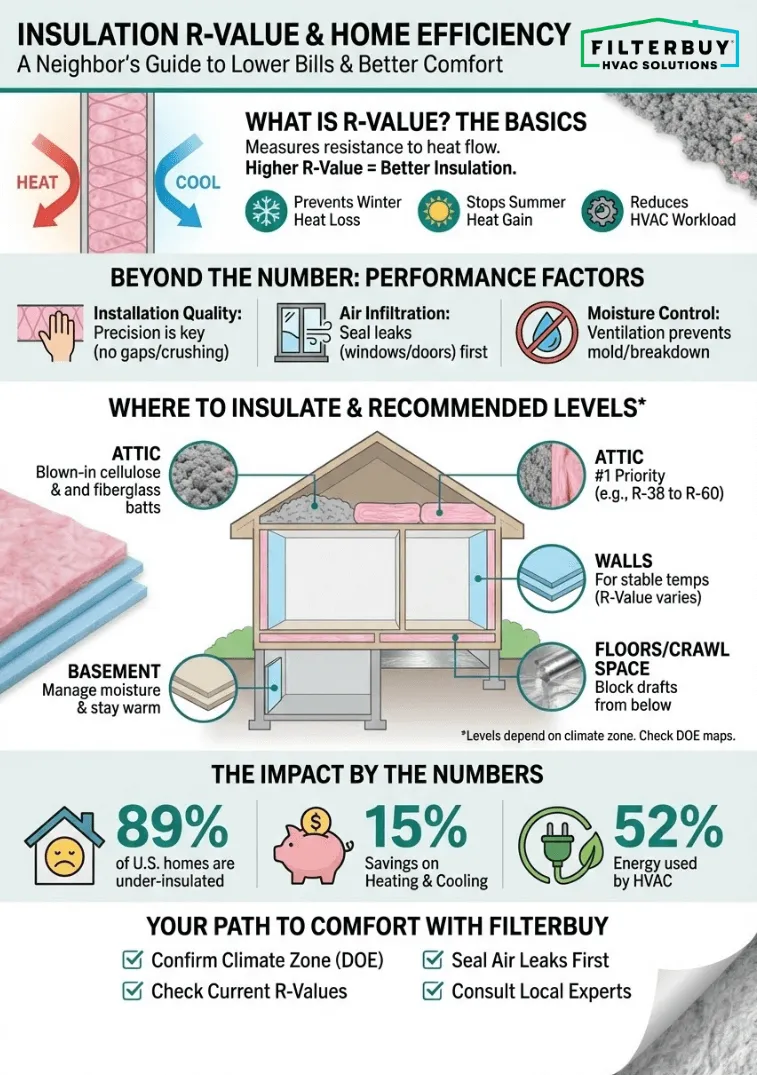
If you’ve ever wondered why your home struggles to stay warm in the winter or cool in the summer, the answer often comes down to one simple number: the R-value. Around here, we explain it to our neighbors like this — R-values measure how well insulation slows down heat from moving in or out of your home. The higher the R-value, the better it protects your indoor comfort.
In colder climates, you need higher R-values to hold onto heat. In hotter regions (like many of the communities we serve), you need enough R-value to keep that heavy summer heat from creeping indoors and making your HVAC system work overtime.
After years of working in homes throughout our area, we can tell you this with confidence: understanding your home’s R-values is one of the most effective steps you can take to improve comfort and lower monthly energy bills. When you choose the right insulation level — the one tailored to your climate and your home — you’ll feel the difference every single day.
What Really Affects Insulation Performance
R-values play a big role, but we’ve learned from hands-on experience in local homes that performance isn’t determined by the number alone. Here’s what truly makes or breaks insulation effectiveness:
- Installation Quality
Even the best insulation won’t work well if it’s crushed, uneven, or full of gaps. Proper installation keeps the insulation performing the way it’s designed to.
- Air Infiltration
We see this constantly — air leaks around doors, windows, and attic access points can undo a lot of good insulation work. A well-sealed home holds comfort more efficiently.
- Moisture Control
In humid areas, moisture can compress insulation or damage it over time. Proper ventilation and moisture protection are key to long-lasting performance.
- Temperature Swings
Some insulation types react differently to extreme heat or cold. Knowing what works best in your climate helps ensure your investment actually pays off.
When homeowners understand these factors, they’re far better equipped to choose insulation that truly supports their HVAC system — not works against it.
A Neighbor’s Guide to Understanding the R-Value Chart
When you look at an insulation R-value chart, you’re essentially comparing how well different materials resist heat flow. But here’s the part most charts don’t explain: how these numbers actually play out in the real-world homes we work in every day.
For example:
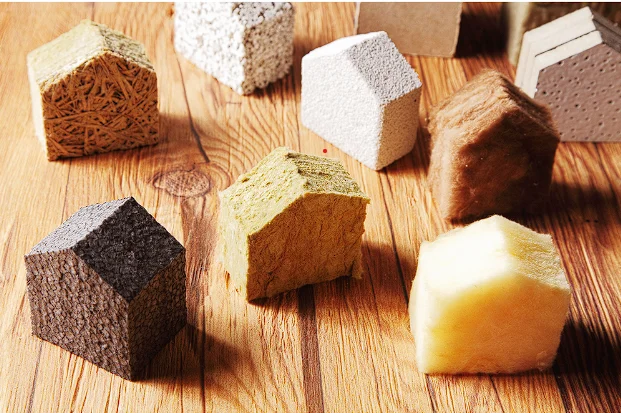
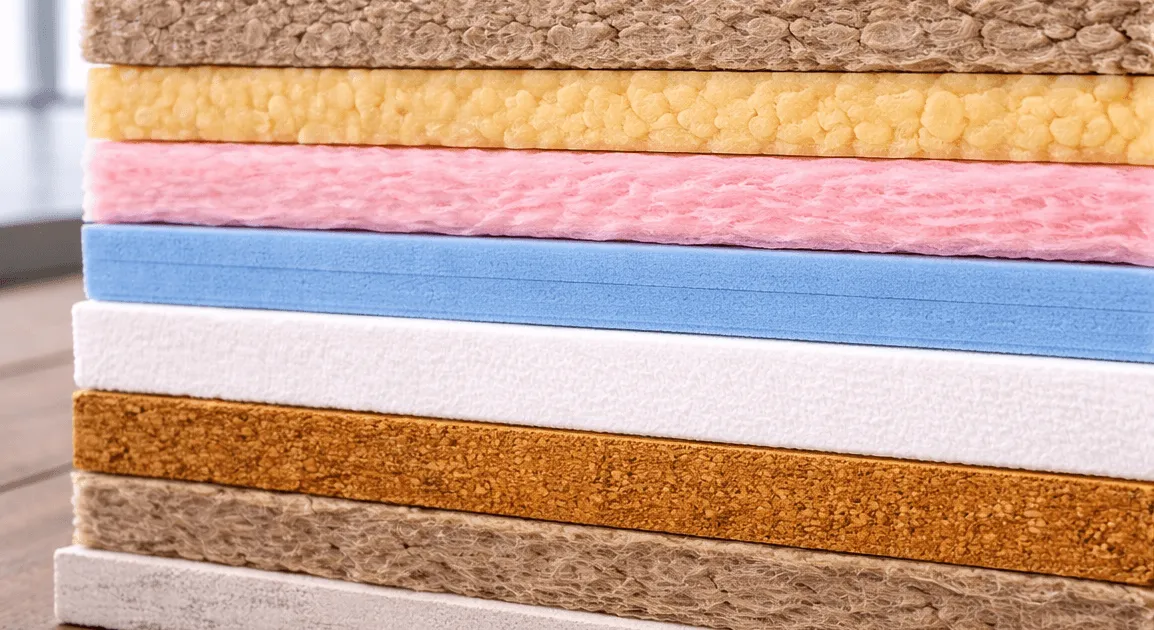
- Fiberglass: typically offers R-2.2 to R-2.7 per inch
- Spray foam: can deliver R-3.5 to R-6.5 per inch, depending on the type
- Cellulose: usually lands in the R-3.0 to R-3.8 per inch range
The higher the number, the more heat it blocks — which means less strain on your HVAC system and lower energy use. Understanding these differences helps you choose the right material for the right part of your home, instead of relying on generic recommendations that don’t reflect local conditions.
Choosing the Right Insulation for Each Part of Your Home
After inspecting and upgrading insulation in homes throughout our community, one thing has become crystal clear: each part of your home needs a different approach to stay truly comfortable. Here’s how we break it down when helping our neighbors:
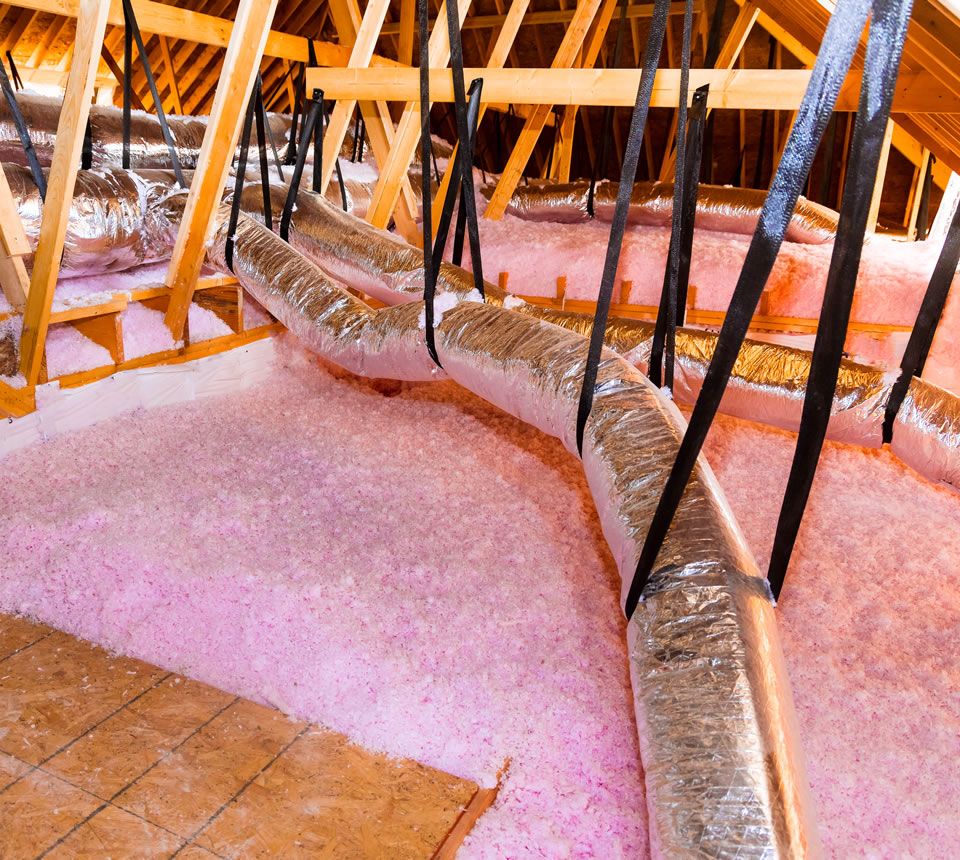
- Attic – This is the number one area where homes lose or gain unwanted heat. Fiberglass batts, blown-in insulation, or spray foam can make a huge difference — especially in older homes.
- Basement – Basements tend to stay cool and damp. Foam board or fiberglass helps manage moisture and keeps the space more comfortable year-round.
- Walls – Cellulose and fiberglass are great for reducing heat transfer and keeping indoor temperatures stable from room to room.
- Floors – If you’ve got a crawl space, rigid foam insulation helps block cold drafts and keeps your flooring more comfortable, especially in winter.
Choosing insulation by area — and by local climate needs — is one of the smartest comfort investments a homeowner can make.
How to Get the Most Out of Your Home’s Insulation
As your local HVAC neighbors, here’s the advice we give homeowners when they ask how to make their insulation work as effectively as possible:
- Choose the right material for the space.
Different areas of your home have different needs, and the insulation should match them.
- Focus on proper installation.
Gaps, settling, or compressed sections can drastically reduce performance.
- Seal air leaks first.
Around windows, doors, and attic access — these are the small gaps that cause big comfort issues.
- Manage moisture and ventilation.
This protects your insulation and helps prevent mold or material breakdown.
- Perform regular checkups.
A quick look every year or two can reveal settling, gaps, or new air leaks.
- Consider reflective barriers in hot climates.
These help block radiant heat and take pressure off your cooling system.
Following these steps can significantly improve comfort, reduce your HVAC system’s workload, and keep your utility bills more predictable throughout the year.
“After years of looking over home energy reports and walking through attics in our own community, we’ve learned something important: insulation isn’t just about matching a number on a chart — it’s about giving your HVAC system the backup it needs to do its job without struggling. When you choose the right R-value for our climate, that system that used to run nonstop suddenly becomes a quiet, steady performer. That’s when you start to feel the difference in your home’s comfort — and see the difference on your energy bill.”
Top Resources Every Homeowner Needs After Reading an Insulation R-Value Chart
1. U.S. Department of Energy – Official R-Value Standards for U.S. Homes
Why it’s valuable: The DOE provides the most authoritative, nationally recognized R-value recommendations. This is the gold-standard reference for choosing insulation levels based on energy efficiency and climate.
Source: https://www.energy.gov/energysaver/insulation
2. ENERGY STAR – Clear R-Value Guidance by Climate Zone
Why it’s valuable: ENERGY STAR simplifies the decision-making process with homeowner-friendly recommendations tailored to U.S. climate zones. It’s ideal for quickly confirming whether your home meets or misses target R-values.
Source:
3. IECC Climate Zone Map – Identify Your Exact Climate Requirements
Why it’s valuable: Your climate zone determines the R-value your home truly needs. The IECC map helps you pinpoint your zone instantly so you can interpret any R-value chart correctly.
Source: https://basc.pnnl.gov/images/iecc-climate-zone-map
4. Owens Corning – Compare Insulation Materials & Their R-Values
Why it’s valuable: This guide explains the R-values of different insulation types (fiberglass, foam, cellulose) so you can compare material performance, cost, and installation needs at a glance.
Source:
https://www.owenscorning.com/en-us/insulation/residential/r-value-calculator
5. Johns Manville – R-Value Data for Real-World Applications
Why it’s valuable: Johns Manville offers detailed specs for insulation used in walls, attics, crawl spaces, and basements, helping homeowners choose products that match their project and efficiency goals.
Source: https://www.jm.com/en/building-insulation/
6. NAIMA Insulation Institute – Trusted Insulation Guides & Fact Sheets
Why it’s valuable: NAIMA provides straightforward, well-researched homeowner guides on insulation performance, proper installation, and long-term energy savings.
Source:
https://insulationinstitute.org/tools-resources/resource-library/home-insulation/
7. Filterbuy HVAC Learning Center – How Insulation Affects HVAC Performance
Why it’s valuable: Filterbuy’s expert insights connect insulation levels to actual HVAC efficiency, comfort, and operating costs — offering a real-world perspective most insulation guides don’t include.
Source: https://hvac.filterbuy.com/
What the Numbers Tell Us — And What We See in Local Homes Every Day
Clear data — paired with what we witness in homes throughout our community — shows just how much insulation R-values impact your comfort, your HVAC system’s workload, and your monthly energy bills.
Most Homes Are Under-Insulated
It’s something we encounter constantly during attic inspections and comfort consultations:
Most homes simply don’t have enough insulation for their climate.
- 89% of U.S. homes are under-insulated (NAIMA).
- We see the effects firsthand in the most common homeowner concerns — uneven temperatures, hot or cold rooms, and HVAC systems that never seem to shut off.
Source: insulationinstitute.org
Insulation Upgrades Lower Energy Costs Quickly
When neighbors ask how to make their home more comfortable without replacing their HVAC system, insulation and air sealing are almost always the first steps we recommend — because the impact is immediate.
- The EPA estimates that proper insulation and air sealing can reduce heating and cooling costs by about 15%.
- Homeowners often notice steadier temperatures and quieter HVAC operation within days, sometimes the very same afternoon.
Source: energystar.gov
Heating and Cooling Use the Most Energy in a Home
If it feels like your HVAC system is doing most of the heavy lifting in your home, that’s because it is.
- About 52% of a home’s total energy use goes toward heating and cooling (EIA).
- Improve your insulation, and your system doesn’t have to run nearly as long, which typically translates to instant comfort improvements.
Source: eia.gov
The Bottom Line
Better insulation supports your HVAC system, improves comfort, and cuts energy costs — and the data only confirms what we experience in homes across our community every day. When your insulation is right for your climate, your HVAC system finally gets the chance to perform the way it was meant to.
Final Thoughts — What We’ve Learned from Homes Across Our Community
Insulation R-values aren’t just technical specs on a chart — they’re one of the biggest factors in whether a home actually feels comfortable day to day. After years of helping families in our community tackle hot rooms, drafty spaces, and HVAC systems running around the clock, we’ve seen the same patterns show up again and again.
Here’s what consistently stands out in the homes we service:
Most Homes Start Behind
- Under-insulation is incredibly common — far more than most homeowners realize.
- It quietly raises energy bills each month.
- And it forces your HVAC system to work harder than it should just to keep up.
The Right R-Value Makes a Fast, Noticeable Difference
- More stable temperatures throughout your home
- Less nonstop cycling from your HVAC system
- A clear comfort improvement — often within days of upgrading
Insulation Is One of the Highest-ROI Home Upgrades
When insulation matches your climate and your home’s needs, everything works better:
- Better comfort
- Lower heating and cooling costs
- Reduced strain on your HVAC system, which can extend its lifespan
Our honest opinion as your neighbors who happen to be HVAC professionals:
Correcting insulation isn’t complicated, and it’s one of the few upgrades that almost always pays for itself. When your R-values are right for your climate zone, your home — and your HVAC system — finally get the support they need.
Next Steps — A Clear Path to Better Comfort and Efficiency
These simple steps can help you understand where your home stands and what to do next:
- Confirm Your Climate Zone
Use the IECC map to find your zone — it’s the first step in choosing the right insulation levels.
- Check Your Current R-Values
Compare what you have in your attic, walls, and crawl spaces with DOE and ENERGY STAR recommendations.
- Inspect Your Existing Insulation
Look for:
- Thin or uneven areas
- Gaps or exposed joists
- Signs of settling or moisture
- Seal Air Leaks
Before adding insulation, tighten up the usual trouble spots:
Doors, windows, attic hatches, recessed lighting, and plumbing penetrations.
- Choose the Right Type of Insulation
Match material to your needs and budget:
- Fiberglass → cost-effective and reliable
- Cellulose → great coverage in walls
- Spray foam → highest R-value per inch
- Plan Your Upgrade
You can DIY simple attic top-offs, but whole-home improvements or air sealing often benefit from a professional hand.
- Monitor the Results
After upgrading, keep an eye out for:
- More stable indoor temperatures
- The less time your HVAC system spends running.
- Lower monthly energy use
These steps give you a straightforward, homeowner-friendly plan for improving comfort, reducing utility costs, and helping your HVAC system breathe a little easier.
FAQ: Insulation R-Value Chart
Q: What does an insulation R-value chart show?
A: It outlines the recommended insulation levels for each climate zone.
Most of the homes we visit fall below these targets — especially in the attic.
Q: How do I know the right R-value for my home?
A: Start by identifying your climate zone.
Then compare your home’s insulation levels with DOE and ENERGY STAR guidelines.
Q: Why do R-values vary by region?
A; Colder climates need higher R-values to retain heat.
Warmer climates need insulation that can block heavy heat gain during summer.
Q: Does adding insulation really save money?
A: Yes — absolutely.
Many homeowners see noticeable drops in heating and cooling costs, often starting with the attic since it’s the biggest source of heat loss and heat gain.
Q: Which insulation type works best?
A:
- Spray foam has the highest R-value per inch.
- Fiberglass and cellulose offer strong performance at a lower cost.
But in our experience, hitting the right total R-value matters far more than which material you choose.
Ready to Put This R-Value Chart to Work in Your Home?
Schedule a free insulation and HVAC comfort assessment with your local neighbors today — and find out exactly where your home stands on the efficiency chart.